
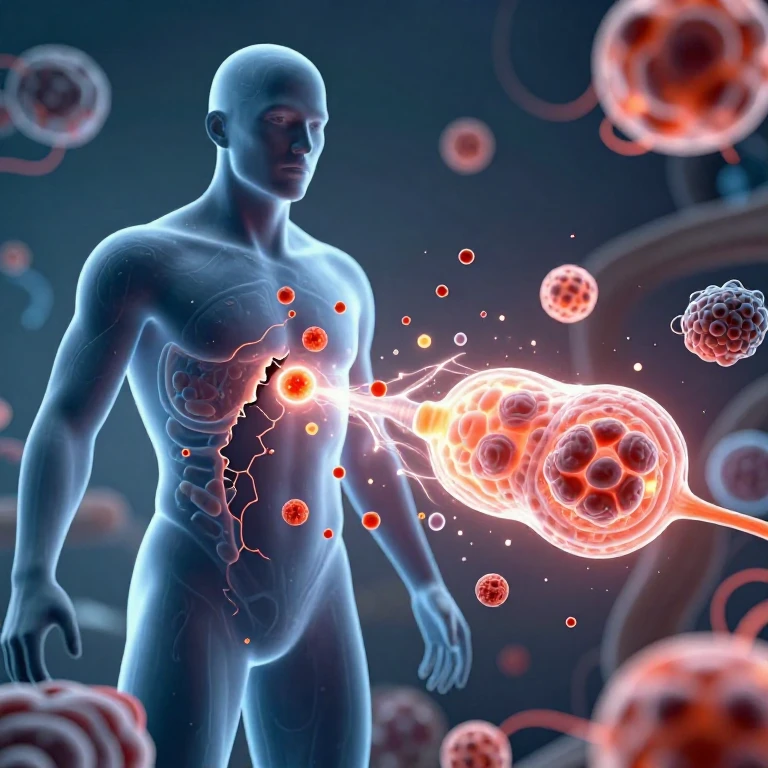
What is Autophagy and Its Importance for Health
Autophagy is a fundamental cellular process that plays a crucial role in maintaining health and promoting longevity. This natural mechanism is responsible for removing cellular debris, including damaged proteins and aging organelles, allowing cells to regenerate and function effectively. During autophagy, the cell forms a structure called an autophagosome, which surrounds and degrades these unwanted particles, recycling useful components for the synthesis of new cellular elements.
One of the main reasons why autophagy is so important for health is its ability to protect the body against metabolic stresses and diseases. For example, autophagy plays a protective role against neurodegenerative diseases, such as Alzheimer’s and Parkinson’s, by eliminating harmful protein aggregates that can accumulate in neuronal cells. Furthermore, autophagy acts in defense against infections by removing pathogens that invade cells, a fact that highlights it as a key component in the body’s immune response.
The mechanisms by which autophagy operates are intrinsically related to the regulation of various metabolic pathways. The activation of autophagy can be influenced by several factors, including diet, physical exercise, and fasting. The practice of strategies such as intermittent fasting has been shown to increase autophagic activity, promoting benefits associated with metabolic health and longevity. Thus, understanding the self-sufficiency provided by autophagy is fundamental for directing interventions aimed at preventive health and healthy aging.
The Biological Switches: mTOR and AMPK
Autophagy, an essential process for cellular health maintenance, is regulated by two fundamental biological switches: mTOR (mammalian target of rapamycin) and AMPK (AMP-activated protein kinase). mTOR is a metabolic sensor that activates in the presence of nutrients, such as amino acids and glucose, thus promoting cell growth and proliferation. When mTOR is active, autophagy is inhibited because the body is in a state of abundance and does not require cellular recycling. This balance is crucial, as excessive activation of mTOR is associated with aging and the development of metabolic diseases.
On the other hand, AMPK acts as a guardian of cellular energy, being activated in situations of energy stress, such as nutrient scarcity and physical exercise. When AMPK is activated, it promotes autophagy and cellular repair, encouraging the recycling of damaged cellular components. This activation helps ensure that the cell maintains its functionality and vitality, even under adverse conditions.
The balance between mTOR and AMPK is vital for optimal health and the maximization of autophagy. Studies suggest that strategies that promote AMPK activation, such as regular exercise and caloric restriction, can offer significant benefits to metabolic health and longevity. At the same time, understanding when to optimize mTOR activity, such as during post-exercise recovery phases, can help facilitate proper cell growth without compromising internal cleaning processes.
Intermittent Fasting and the Promotion of Autophagy
Intermittent fasting (IF) has stood out as an effective approach in promoting autophagy, a fundamental cellular process that recycles damaged components and eliminates toxins. During fasting periods, the body experiences a significant reduction in energy intake, which activates various metabolic pathways that encourage autophagy. This phenomenon occurs because the absence of nutrients, particularly proteins and carbohydrates, deactivates the signaling pathways that inhibit this process, allowing cells to enter a maintenance and repair mode.
One of the most common intermittent fasting protocols includes the 16/8 practice, where the individual fasts for 16 hours and eats during an 8-hour window. Another popular protocol is 5:2, which involves restricting calories to 500-600 calories on two days of the week, while eating normally on the other five days. These methods have been shown not only to promote autophagy but also to improve general metabolic health, including insulin sensitivity and the reduction of inflammation.
The benefits of intermittent fasting go beyond cellular recycling; it is associated with the elimination of pathogens and the reduction of oxidative stress, which translates into additional protection against various diseases. By reducing the load of toxins accumulated in the body, IF promotes a state of cellular renewal. Furthermore, the regular practice of intermittent fasting has been correlated with longevity, suggesting that this strategy may play a significant role in expanding healthy life expectancy. Therefore, intermittent fasting not only initiates an autophagy process but also contributes to a longer and healthier life.
Lifestyle: Exercise and Sleep to Increase Autophagy
Autophagy, a crucial process for cell regeneration and toxin removal, can be significantly influenced by our lifestyle. Regular exercise and quality sleep are fundamental in this context, as both contribute to metabolic health and can potentiate the effects of autophagy. The practice of light physical activities, such as walking, yoga, or stretching, not only promotes blood circulation but also stimulates the body to enter a state of autophagy. This health-favorable state is activated during exercise periods, when cells receive the signal that they need to adapt to increased metabolic demands.
Moreover, sleep quality plays an equally important role. Deep and restorative sleep is essential for physical and mental recovery, facilitating cellular cleaning processes that occur during the night. Studies show that sleep deprivation can impair autophagy, leading to the accumulation of toxins, especially in the brain. Therefore, prioritizing a sleep routine, adopting practices such as creating an environment conducive to rest and reducing exposure to electronic devices before sleeping, can be a simple yet effective strategy.
To integrate these habits into daily life, it is recommended to establish an exercise schedule that adapts to your preferences and personal commitments, encouraging consistency in practices. Additionally, implementing a relaxation routine at night, such as meditation or reading, can facilitate the transition to good quality sleep. The adoption of a lifestyle that prioritizes exercise and sleep thus becomes an indispensable tool for maximizing autophagy, culminating in optimized metabolic health and a more efficient body.